


Facing brickslinea7 7036
Technical data sheets
- Color description
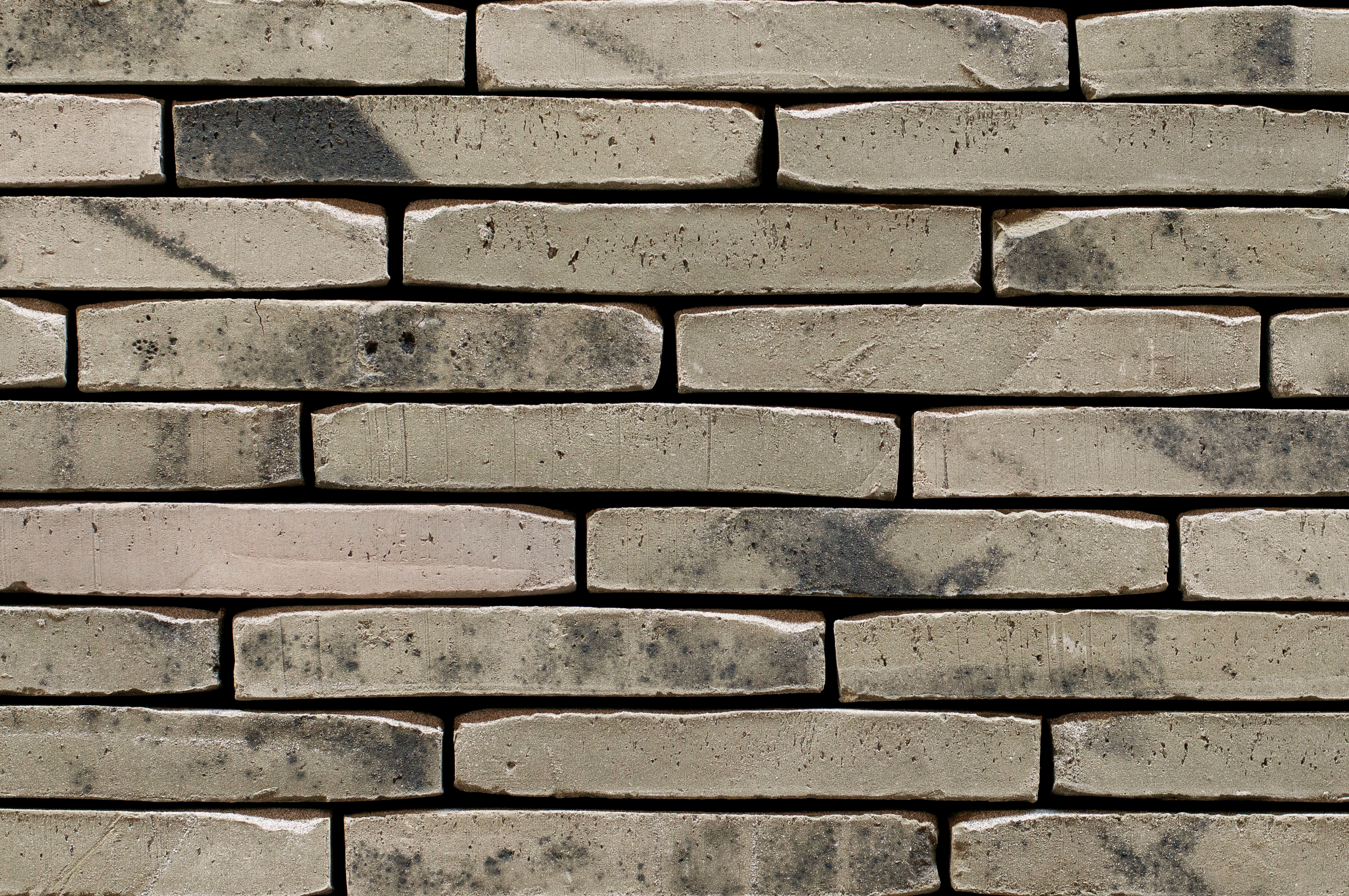
- The colour is grey-green through and through with a nuanced irregular grey-black surface texture.
- Manufacturing dimensions (L x W x H)
- ca. 246x75x38 mm (LxWxH)
- Quantity / m² with a traditional joint
- 78 (12 mm)
- Number / m² with a thin joint
- 90 (6 mm)
linea7 7036
Grey-green slim brick
This thin facing brick with subtle shading is produced using the Wasserstrich method. In addition to our ECO-7-size label it also carries our Hand-Made label which guarantees a strong, natural nuance. Thanks to its durable properties, this grey-green unsanded ecological variant from our linea7 series offers more space for insulation or habitable area. Like all bricks in our linea7 range, it is ideal for accentuating clean lines in decorative brickwork.
case studie linea7 7036
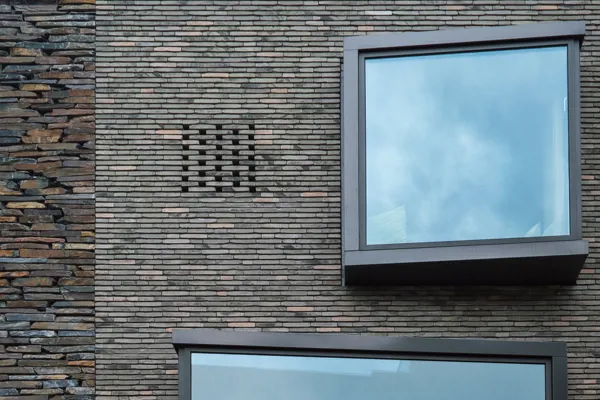
The Hand-Made linea 7036 as a canvas for distinctive bay windows
A contrasting interplay between rough contours and clean lines
The transformation of the Delft Railway Zone includes the creation of a new residential district: Nieuw Delft. One of the neighbourhoods in Nieuw Delft – Coendersbuurt – is characterised by its small scale, family-friendly living environment and typical Delft streets of terraced houses.
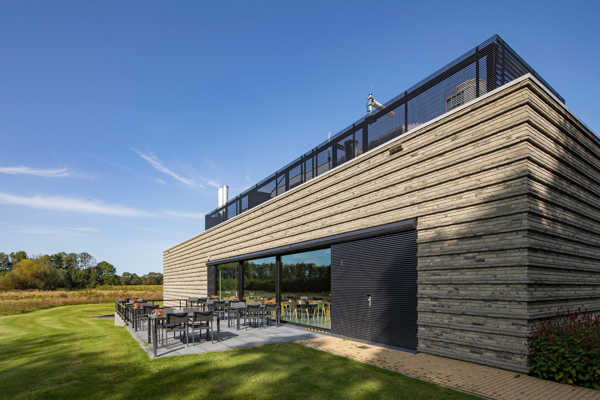
Oldenzaal Crematorium: vibrant brick volume radiates desired serenity
Ecological Nature7 Brick R and narrow linea 7036 join forces to create striking relief pattern
The new Oldenzaal Crematorium is situated in a beautiful location, near the cemetery, in a landscape characterised by wooded countryside and gentle hills. The small developed area – initially only earmarked for a cremation area – led to the sleek, compact design in which the ceremony room and the reception room are positioned above the cremation area.
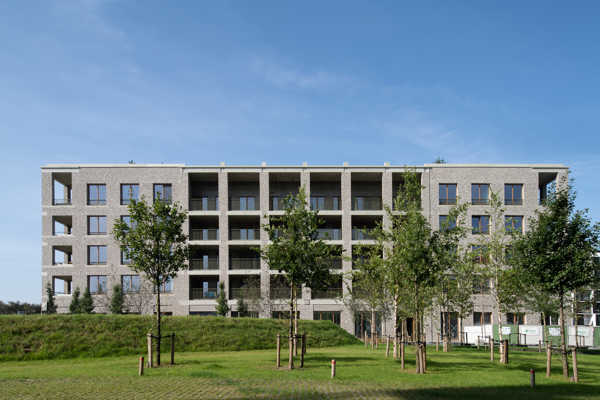
Block 18 Nieuw Zuid, Antwerp: Linea 7036 and 7035 with flush brushed joints help to realise the solid appearance of this special building
Striking residential block at Nieuw Zuid in Antwerp gives a nod to Italian palazzi
Nieuw Zuid in Antwerp is a beautiful and contemporary form of urban development. The site of a former freight train station has been transformed, creating a more pleasant and liveable city.
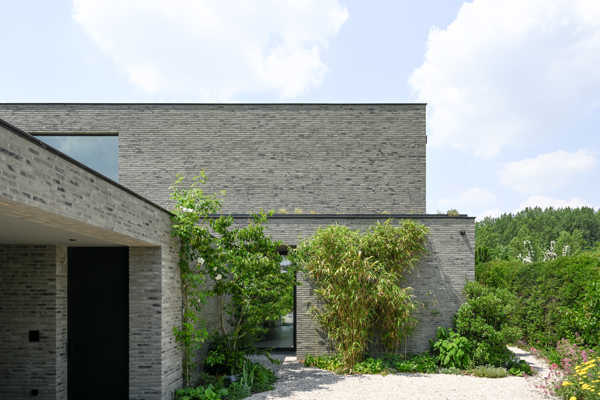
Symbiosis of architecture and nature: a home as a living landscape
Pascal Bilquin and Guy Speltdooren on the art of spatiality, collaboration, and living in harmony with the environment.
Pascal Bilquin and Guy Speltdooren have known each other for years. They regularly collaborate on projects—Bilquin as an architect, Speltdooren as the managing director of total contractor Bouw-iD. Recently, the duo completed a remarkable family home on the banks of the Leie in Deinze, Belgium. The result is a masterclass in control and precision, inspired by nature, where each space offers a different experience. “It’s a house with multiple dimensions, where at times you see a lot, and at times very little.”
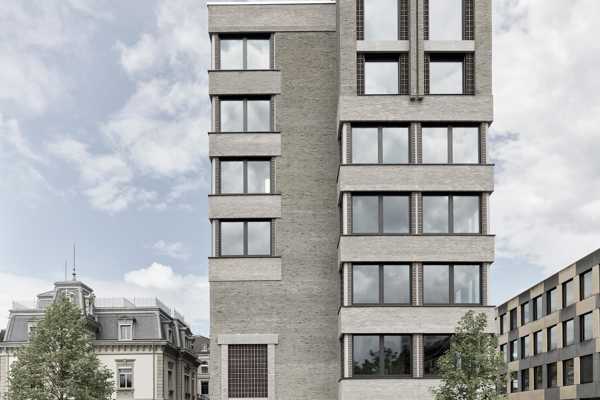
Seven-story modern structure in facing brick linea 7035 and 7036 complementing historical craftsmanship
Crucial role of facing brick serving aesthetic purpose and material harmony
The Villa Wiesental, a historic Gründerzeit villa built in 1878 by architect Daniel Oertli, stood as a testament to the craftsmanship and grandeur of its time. Commissioned by Konrad Menet Tanner, a wealthy textile merchant, the villa and its garden in St. Gallen, Switzerland, fell into disrepair after years of neglect. To ensure its preservation and reintegration into modern urban life, the owners proposed a thoughtful redevelopment plan. Central to this transformation was the construction of a seven-story modern structure adjacent to the villa, designed to complement its historical significance. At the heart of this architectural narrative was the selection and use of facing bricks, which not only served aesthetic purposes but also played a crucial role in the project's conceptual and material harmony.
Continue reading
References


How to Install ?
Preparation of the construction site
- Always order the full amount of bricks required for a specific site. In this way, the entire order can be made during one production run.
- Try to have the full order supplied at one time. If this creates several deliveries, always mix a number of packs from the previous delivery with a number of packs from the new delivery. This procedure is especially recommended in case of re-order or for an additional order.
- Take bricks diagonally across the pack.
- Draw and use bricks from at least five different packs.
- For setting out, use bricks from the delivery made to the site in question. Do not exclusively use the theoretical dimensions of the brick, or samples previously supplied, or different production run from that intended for the site.
- As soon as the bricks arrive on site, check delivery tickets and certificates against the specification and order. Also check that there are no visible inconsistencies with the order.
- Do not lay bricks in freezing weather or protect the ‘fresh’ masonry with insulating mats in order to avoid frost damage to the mortar.
- In the case of prolonged dry hot weather, lightly dampen the newly laid brickwork to stop the mortar drying and curing too quickly.
- Do not lay bricks in precipitation in order to prevent mortar from running on the wall.
Avoid Efflorescence
- During and after laying, protect the newly built brickwork for a height of at least 60 cm - but ensure there is airspace between the brick face and the waterproof covering.
- Provisionally install rainwater down pipes to avoid saturation of the newly laid brickwork
- Never lay bricks in driving rain conditions