


PROJECT
Fish island, Hackney Wick, East London, UK
CLIENT
Future Generation, CA Ventures, University of the Arts London
ARCHITECT
CONTRACTOR
HG Construction
FACING BRICK
NATURE10 Brick E & NATURE10 Brick J
Photo's: © Rory Gaylor
Robust, textured façade at Fish Island, London
A contemporary masonry reinterpretation of East London’s industrial heritage by Henley Halebrown
Fish Island is a mixed-use development by Henley Halebrown located in Hackney Wick, East London, an area shaped by a long industrial history and now undergoing significant regeneration. The project is delivered in two phases, with Fish Island West completed in 2024 and Fish Island East to follow. Together, they form a robust urban block combining student accommodation, creative workspaces and publicly accessible ground-floor uses, contributing to the evolving character of the neighbourhood.
The architectural approach is firmly rooted in the material language of Fish Island’s industrial past. Former warehouses, factories and infrastructure have informed a design that favours permanence, texture and depth over lightweight or temporary expressions. The role of bricks are central in this strategy, giving the buildings a strong civic presence while allowing them to sit comfortably within their gritty context.
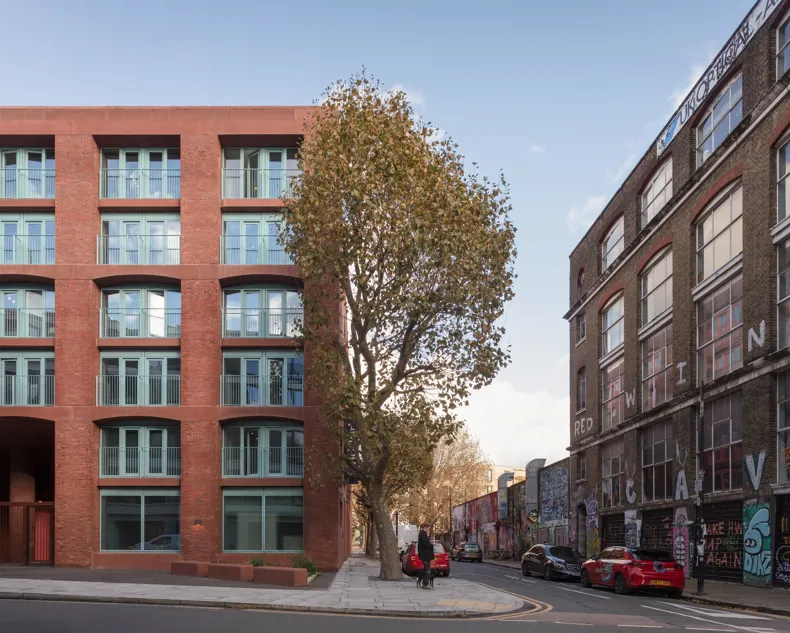
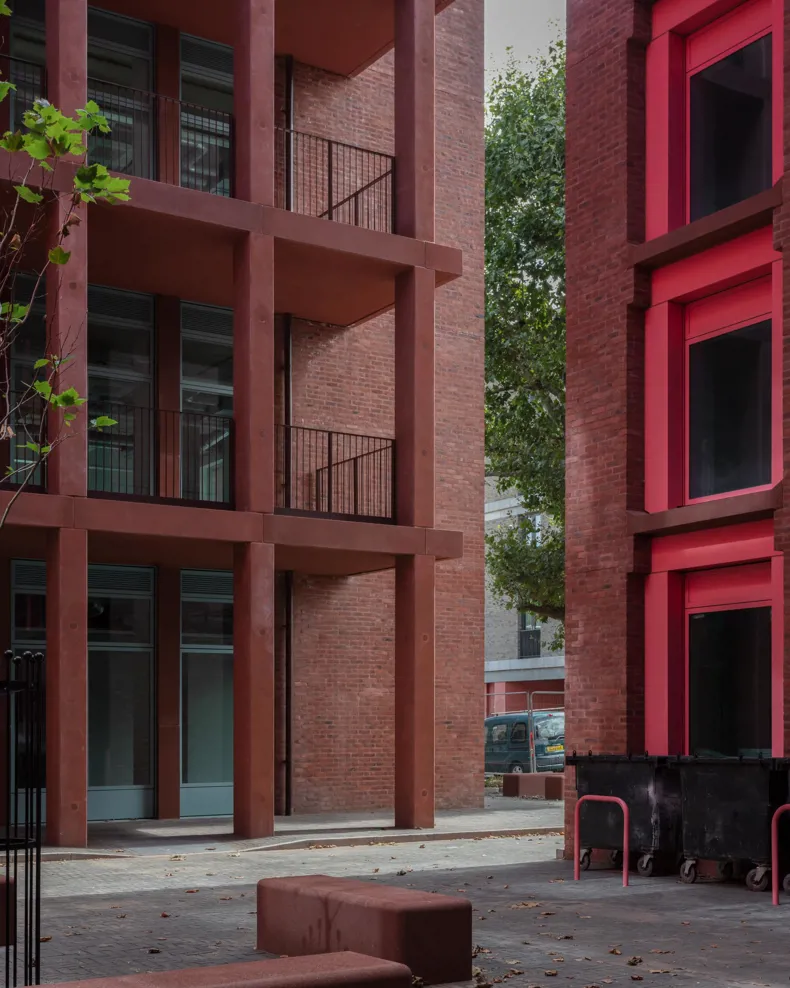
Fish Island West is organised around two courtyard spaces: a private garden for residents and a more open yard activating the ground floor studios. Along the street, the façade is articulated as a long masonry elevation punctuated by large openings framed with substantial brick piers and precast concrete elements. These gestures break down the scale of the building while recalling the monumental proportions of historic industrial architecture. Carefully composed window groupings and deep reveals add rhythm and shadow, ensuring the façades remain visually rich at both street level and from a distance.
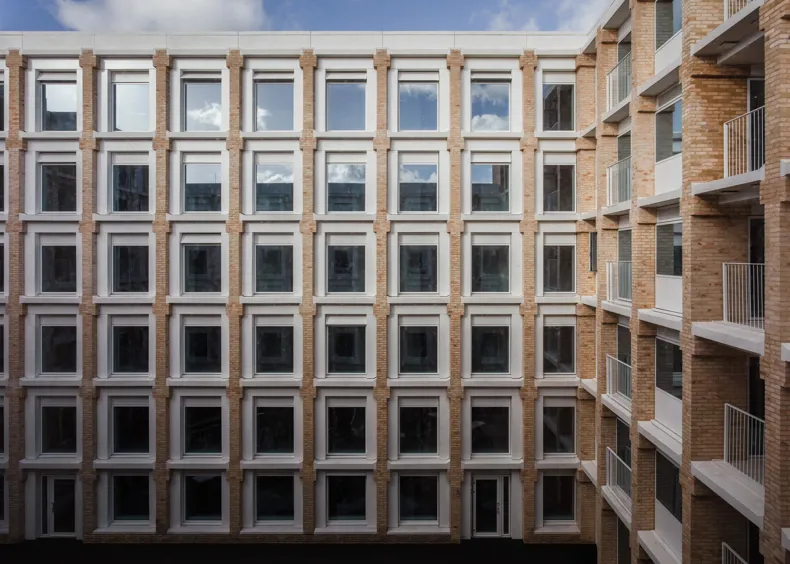
The facing brickwork was a critical component in achieving this layered architectural expression. Henley Halebrown selected two hand-made facing bricks from Vande Moortel’s Hand-Made collection: NATURE10 Brick E and NATURE10 Brick J. Both bricks are produced using traditional techniques that result in subtle irregularities, colour variation and a distinctly tactile surface, qualities that align closely with the project’s material ambitions.
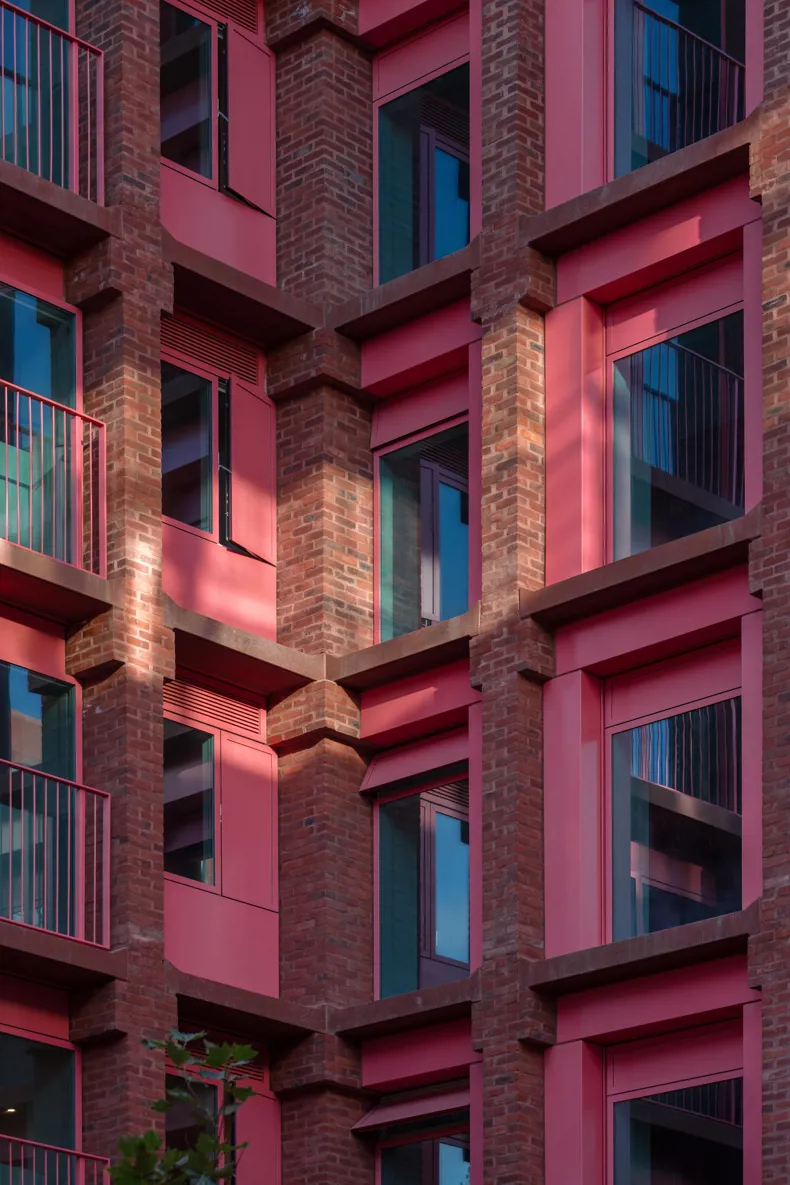
NATURE10 Brick E, with its deep red-brown tones and nuanced colour shifts, reinforces the industrial character of the scheme, referring to the historic Victorian warehouses. Its richness allows the façades to read as solid and grounded, while still responding sensitively to changing light conditions. The contrast with the colourful window elements creates a youthful, dynamic character. NATURE10 Brick J, lighter in appearance with cream and ecru tones, introduces contrast and subtle modulation across the elevations. Used on the courtyard side of the building, it enhances the sense of lightness and openness.
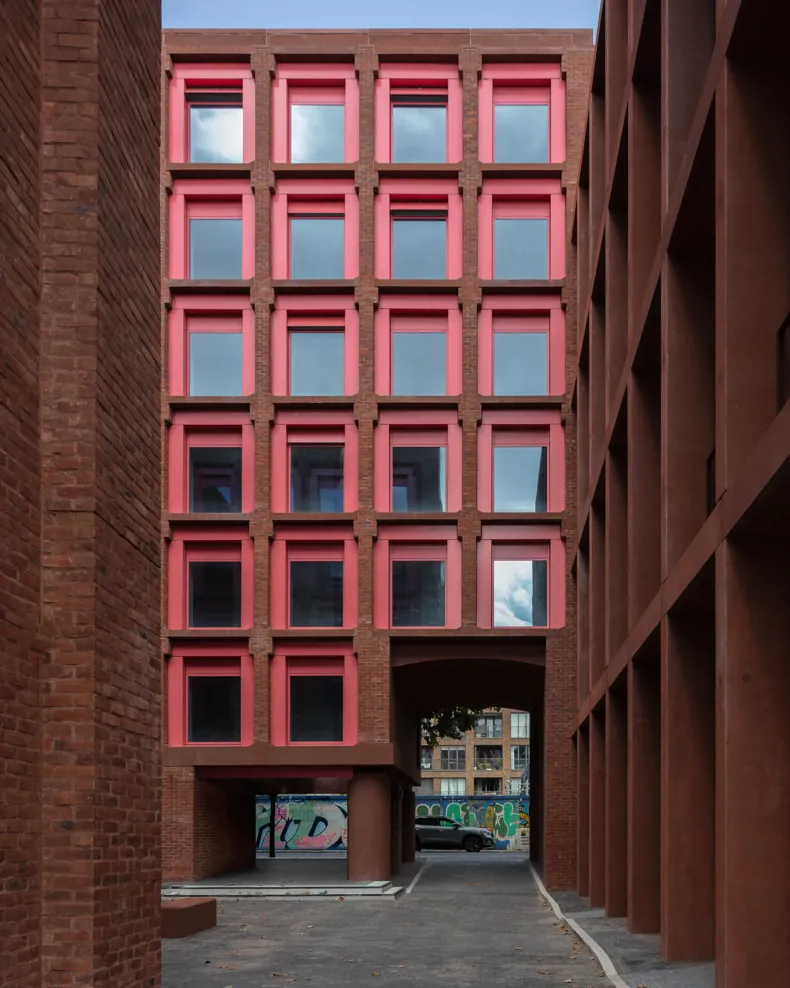
Beyond their aesthetic contribution, the bricks support the project’s emphasis on longevity and robustness. Their durability and inherent material quality suit a dense urban setting and a building designed for intensive use. The result is architecture that feels both contemporary and deeply connected to its setting.
Comparable case studies

Two impressive hexagonal towers in London with facing bricks NATURE10 Brick E and Brick S
Hoxton Press on the Colville Estate, a housing development in Hackney, in East London was designed by world famous architects David Chipperfield Architects and Karakusevic Carson Architects.
