


PROJECT
Cité de Pesay
ARCHITECT
CONTRACTOR
Fondation de placements immobiliers Turidomus et Fondation Immobilière Communale de Lancy
FACING BRICK
NATURE7 Brick J (brick slips)
NATURE7 Brick L (brick slips)
Photo's: © Paola Corsini
Cité de Pesay in Geneva: urban architecture shaped by facing brick
How Jaccaud + Associés use handcrafted brick slips to give character and robustness to an urban residential complex
Located in a rapidly changing area in the immediate vicinity of the Léman Express's ‘Bachet’ stop, the Cité de Pesay is a major urban development project for southern Geneva. The result of an SIA 142* competition launched in 2016, the project designed by Jaccaud + Associés responds to a complex context combining rail infrastructure, major road axes and new urban centres, while asserting a strong architectural and social ambition.
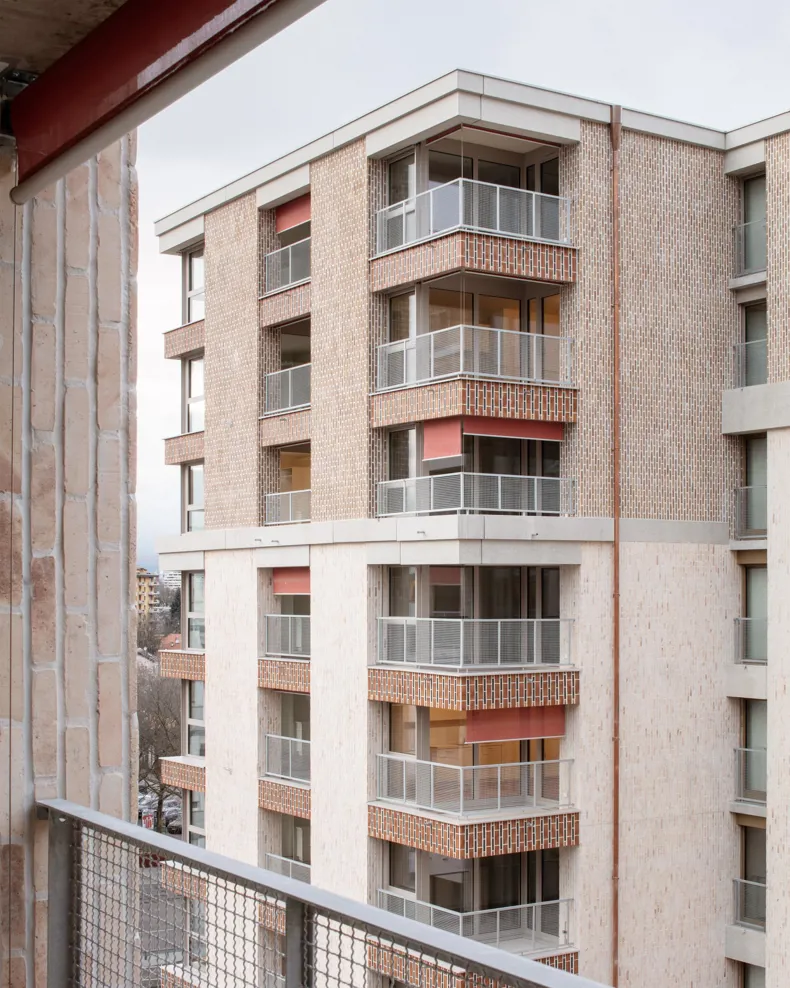
The project is developed around a large protected public garden, the true heart of the development. The volume is bent and fragmented in order to reconcile the irregular geometry of the site and mitigate the perception of the built mass. On the Route de Saint-Julien side, these folds are accompanied by a planted space that transforms the road into an urban boulevard, enlivened by active ground floors and covered walkways that promote permeability towards the garden. On Avenue Eugène-Lance, the building adopts a more assertive geometry, interacting with the scale of the Promenade des Crêtes and its built environment.
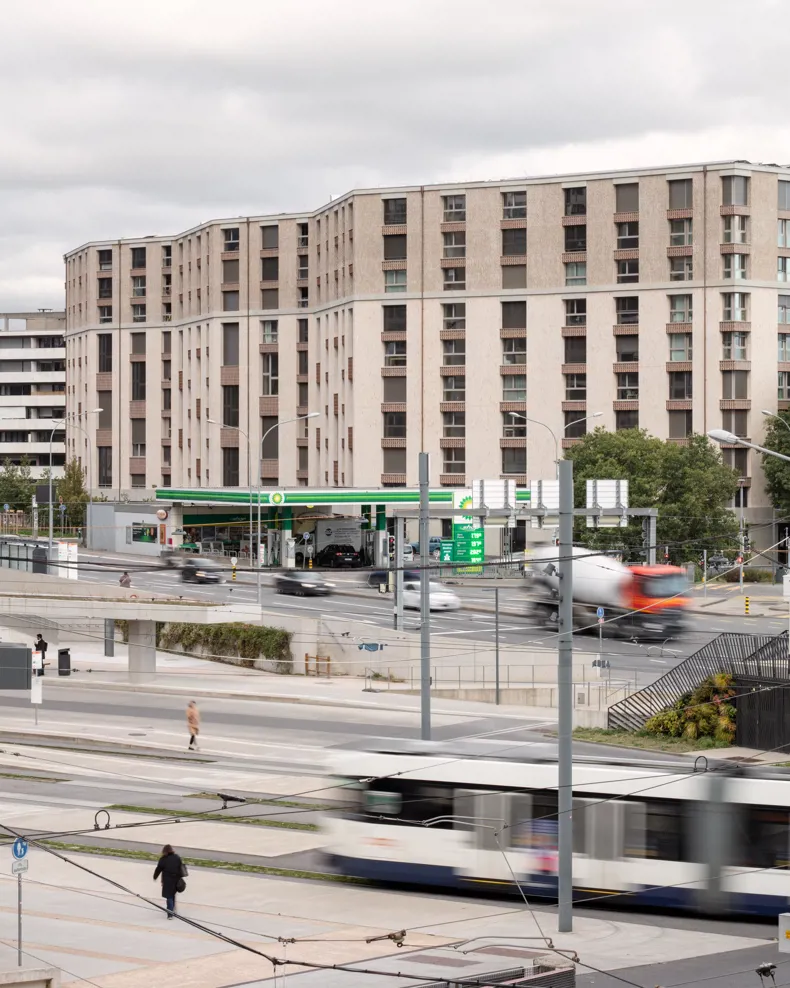
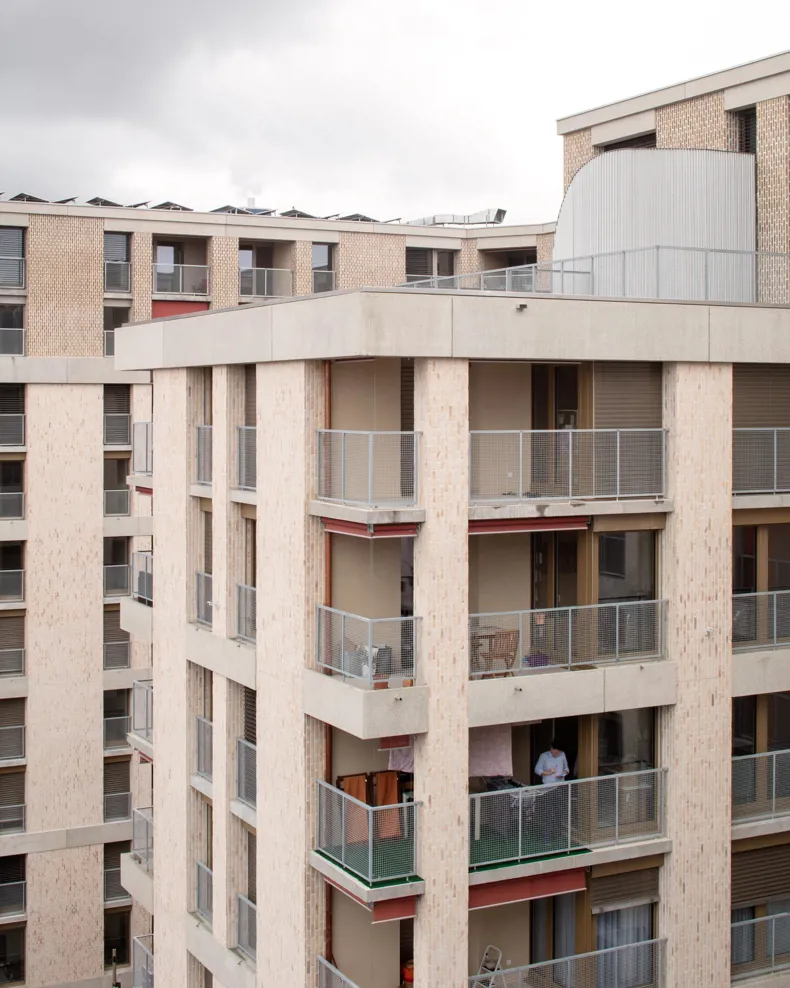
The programme, spread over seven stairwells, includes public housing for the Turidomus Foundation and the Fondation Immobilière Communale de Lancy, student housing, two commercial arcades and an after-school reception area. Typological diversity is a central element of the project: dual-aspect apartments, corner apartments with double orientation, generous penthouses and double-height apartments on the road side, combining spatial quality, distant views of the Salève and the Alps, and high acoustic standards.
The choice of NATURE7 Brick J & L facing bricks, used in the form of brick slips, is fully in line with this quest for consistency between architecture, context and use. Their artisanal manufacture was a decisive factor: each facing brick, unique in its nuances and texture, gives the whole a warm materiality and visual depth that enriches the reading of the façades. This approach reinforces the building's robustness in the face of urban stresses while offering a sensitive and lasting expression.
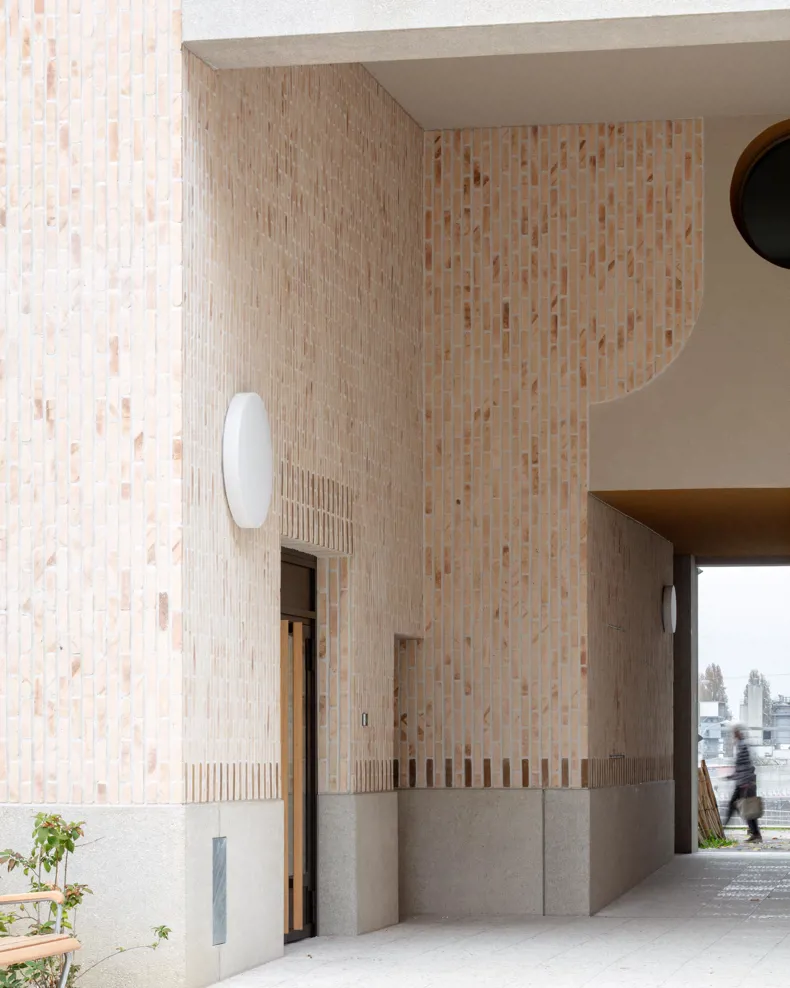
The colour, size and use of the facing bricks play a key role in the architectural composition. NATURE7 Brick J, used mainly on the façade, is distinguished by its nuanced, soft and mineral beige colour, which subtly captures natural light. This light colouring allows the building to blend harmoniously into its urban and landscape context, while reinforcing the perception of lightness of the volumes despite their size.
The differentiation of the bricks on the top floors allows for a mediation of scale with the neighbouring buildings and echoes local references, notably the Trèfle d'Or building and its play of contrasting materials. The vertical installation of the brick slips accentuates the slenderness of the volumes, clearly assuming their non-load-bearing role while contributing to the identity of the project.
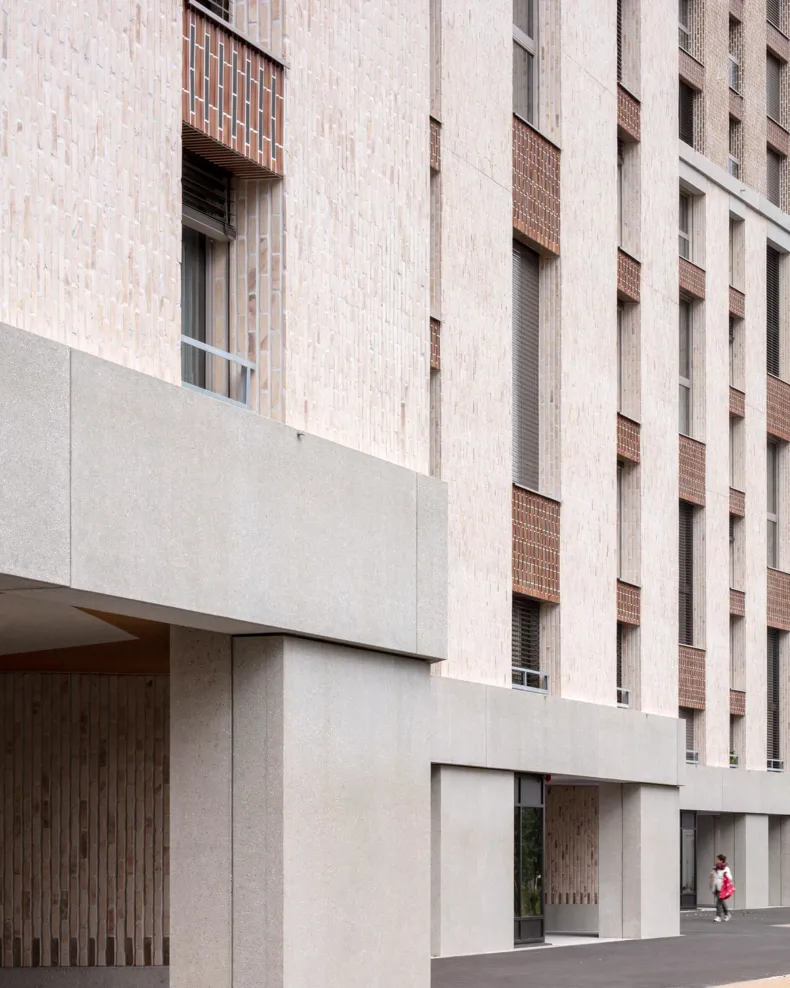
Finally, the combination of facing bricks with other materials reinforces the expressive richness of the whole. On the courtyard side, they interact with the exposed concrete bands and galvanised steel railings in a deliberately raw style. On the street side, the contrast between the matt finish of the bricks and the reflective ceramic elements of the spandrels creates a subtle play of light and depth, giving the Cité de Pesay a strong, contemporary and sustainable urban presence.
*SIA 142 competition (2016):
The SIA 142 competition is an architectural competition procedure defined by the Swiss Society of Engineers and Architects (SIA). It is an open project competition, governed by rules that guarantee anonymity, equal treatment of participants and the architectural quality of the proposals. This type of competition is commonly used for large-scale public or public utility projects, particularly in complex or changing urban contexts.
Comparable case studies

‘De Zuidkolk’ - Hooikade, Delft: vibrant architecture and sculptured space for nineteen spacious apartments with expansive views
The special place in the panoramic view of the Schie where Vermeer painted his View of Delft is now marked by the ‘De Zuidkolk’ building. The city may have changed but the view is still as exceptional as ever. Nineteen spacious apartments with expansive views and striking sculptural architecture now occupy this ‘postage stamp’ of a site.
